Assemble
Compensation Cycles
Assemble
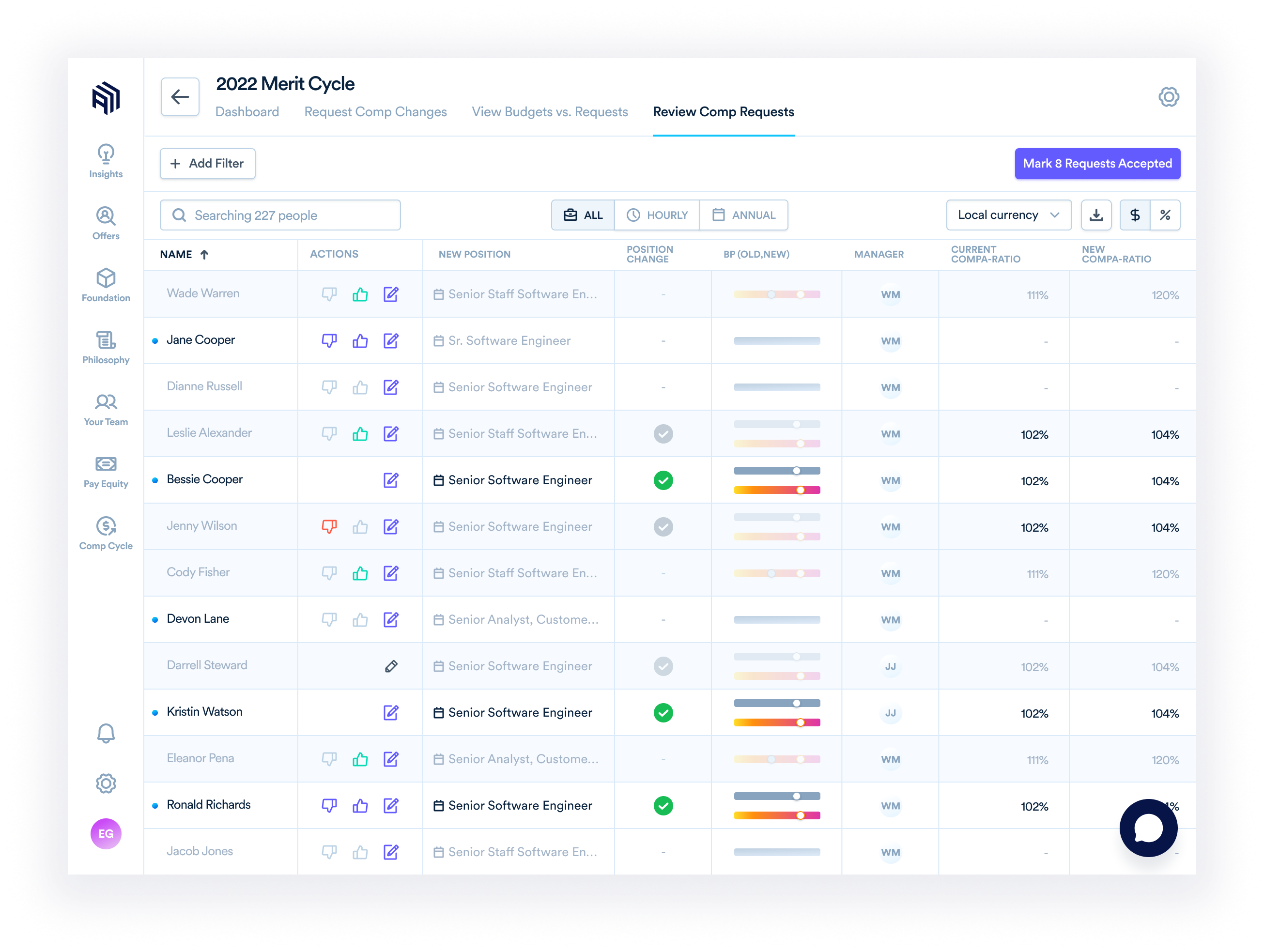
Compensation cycles are some of the highest-stakes moments for any organization. They’re infrequent, time-bound, emotionally charged, and require tight coordination across People, Finance, and Leadership.
At Assemble, we saw teams repeatedly struggle with the same problems: fragmented planning, limited visibility into progress, and an over-reliance on brittle spreadsheets to manage what should have been a structured, collaborative process. What should have felt deliberate and confidence-building instead felt stressful, opaque, and error-prone.
Our goal was to design a system that helped teams plan, execute, and collaborate on compensation cycles with clarity — without asking them to stitch together spreadsheets, docs, and side conversations just to get through the process.
Project Deets
Product Goals
We began by mapping how compensation cycles actually ran inside customer organizations — not how they should run.
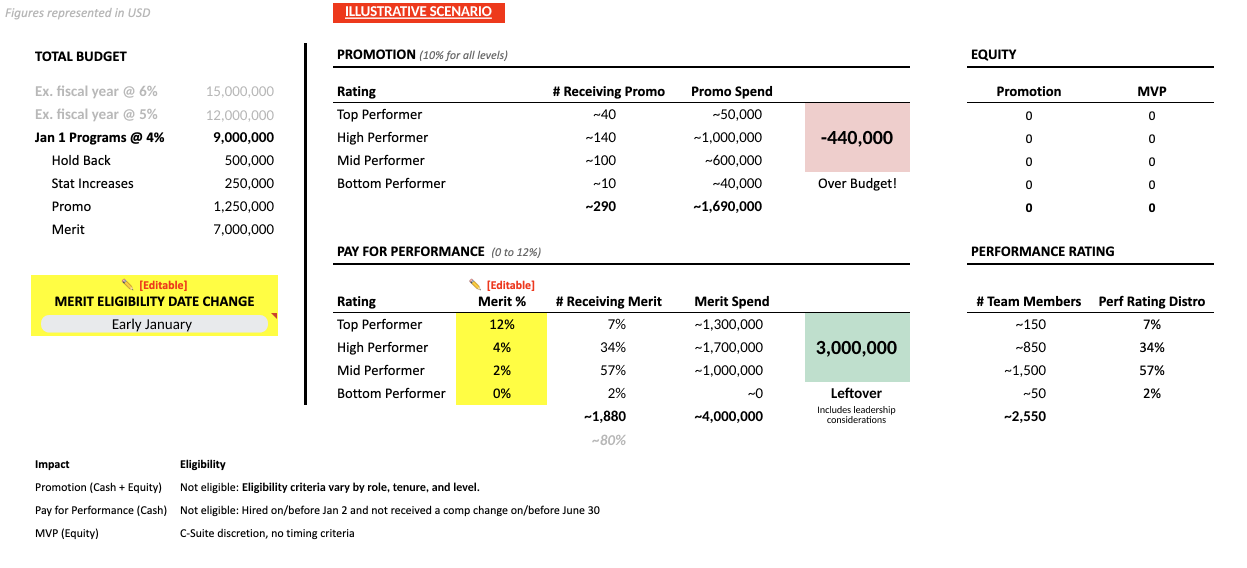
Across interviews and workflow audits, a few patterns emerged quickly:
Despite these issues, spreadsheets persisted because they were flexible, familiar, and fast to spin up. Any solution we designed had to respect that reality while offering something meaningfully better.
Rather than starting with every possible compensation scenario, we focused on establishing a clear, repeatable foundation that could support most cycles. We aligned on a small set of core building blocks:
This allowed us to reduce a complex, multi-month process into a series of understandable phases.
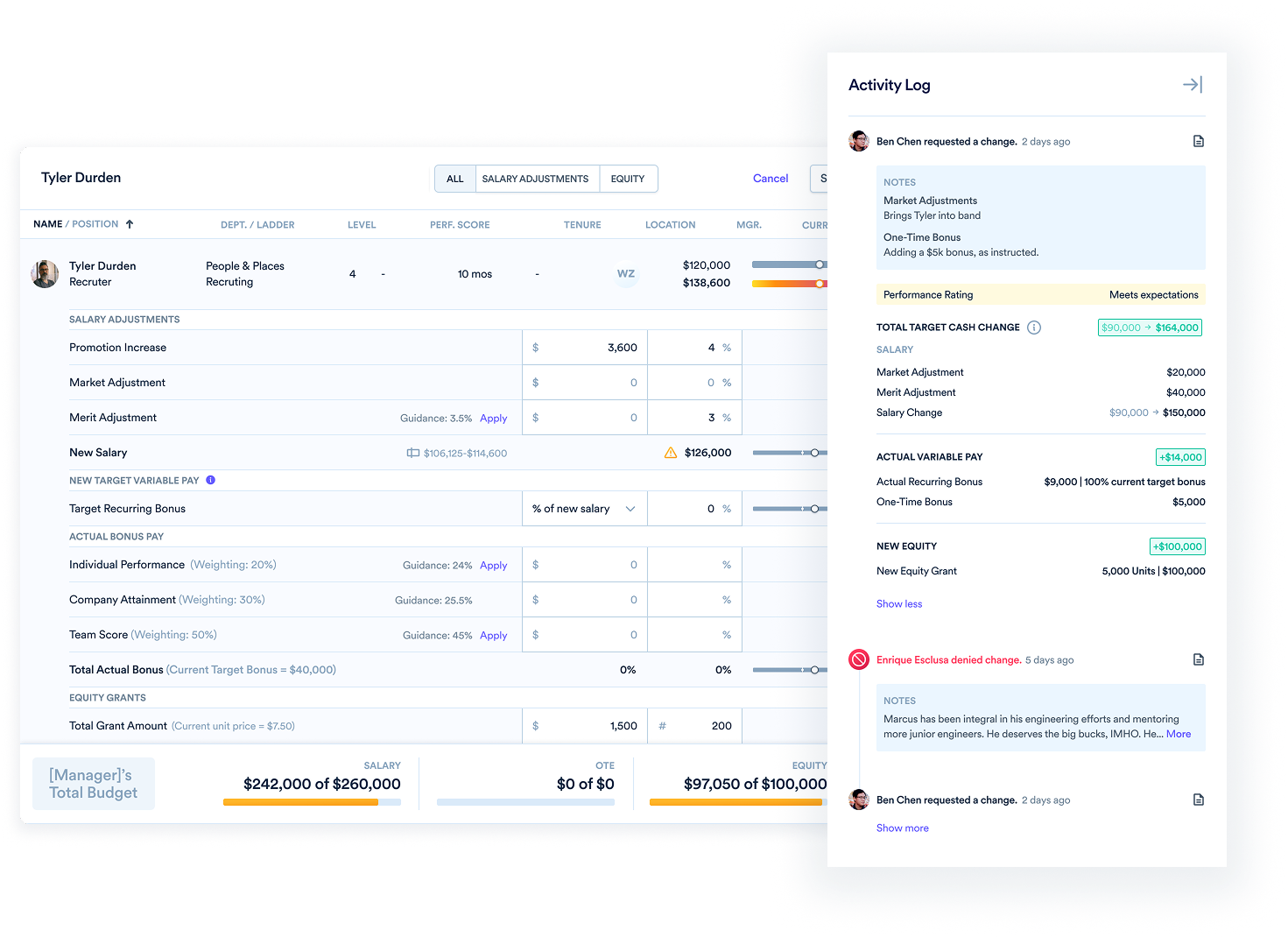
One of the hardest design challenges was replacing spreadsheets without alienating users who depended on them. We intentionally designed Assemble's experiences to feel spreadsheet-like where it mattered — tabular layouts, bulk actions, clear columns — while layering in what spreadsheets couldn't offer:
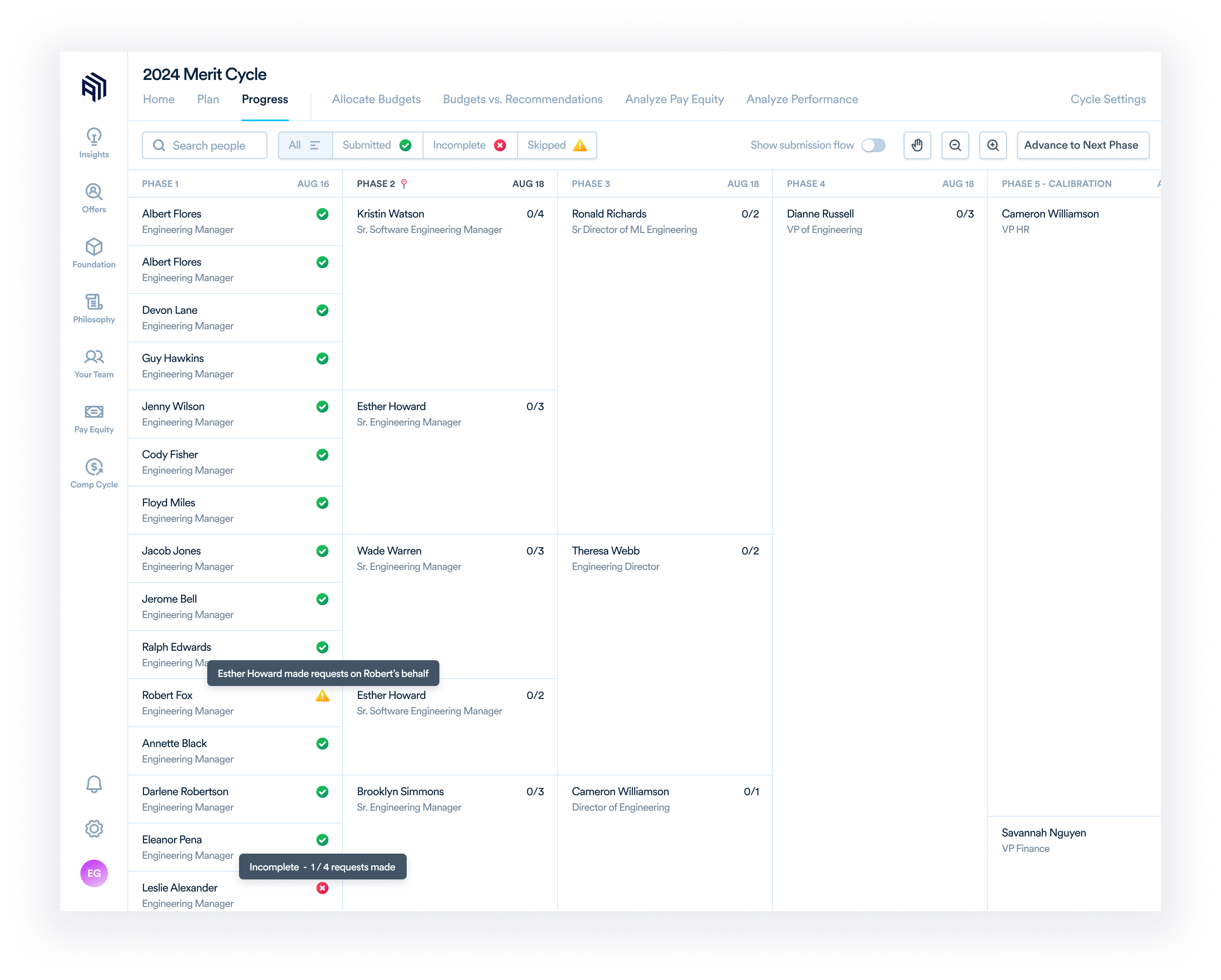
To address the concerns the cycle wasn't on track, we introduced a view to show progress at multiple levels:
This reduced the need for manual check-ins and gave stakeholders confidence that the process was moving forward — or clear signals when it wasn't.
Compensation Cycles became one of Assemble’s most critical workflows — not because it introduced complexity, but because it removed it.
Customers ran hundreds of compensation cycles and the new system helped them complete them faster and with less friction.
10
Average number of days to complete a compensation cycle, down from 24+ days.
2
Average number of spreadsheets required to complete a compensation cycle, down from 6+.
30
Average number of people in Assemble participating during a given cycle.
Overall compensation cycles were a big success, but, there are a few areas I would have loved to explore more.
We never built a notification system to alert participants when their requests were being reviewed, approved, or when it was their time to act. I am curious to see how this might have improved the speed in which a cycle was completed and the overall satisfaction of the process.
One product that was on our radar but wasn't built prior to the acquisition was a Total Rewards Statement, which would have communicated all adjustments downstream to the employee. This would have been a great way to improve transparency and communication throughout the organization and way to get even more customers into the Assemble platform.
Lastly, there were complex workflows like assigning managers to phases, providing managers with the appropriate guidance percentages for bonus/merit - thankfully I was given the opportunity to iterate on this as we transitioned to Deel. The redesign of these two features was received very positively by Deel customers.